Awning windows are a popular window style that blends design, function, and comfort. In this guide, we’ll explain what an awning window is, how it works, and why homeowners choose it. You’ll learn about its definition, types, parts, design, benefits, and disadvantages. We’ll also cover pros and cons, compare awning windows with casement and hopper styles, and help you see where these windows fit best in a modern home. By the end, you’ll have a clear answer to the question: what is awning window and whether it’s the right choice for you.
Understanding Windows Beyond the Basics
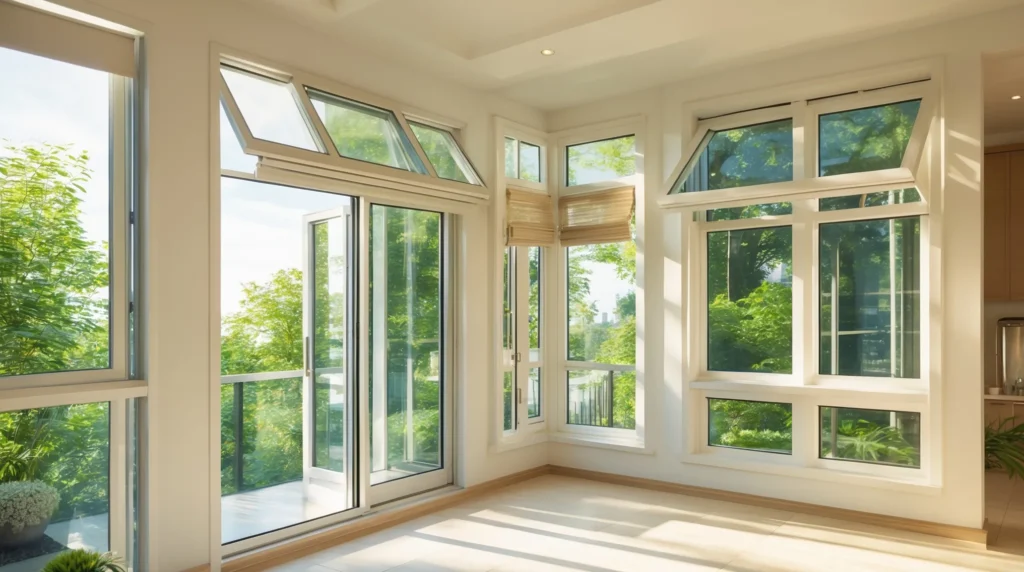
Windows are more than openings in a wall. They shape how light enters, how air moves, and how comfortable a space feels. Over time, different types of windows have been designed to meet changing needs. From sliding glass to casement styles, each offers something unique. Among these, awning windows stand out for their smart design, practical function, and stylish look. Before diving deeper, it helps to understand why they matter and how they fit into the wide world of window styles.
What Is an Awning Window? A Simple Explanation
So, what is awning window? In simple words, it is a window that is hinged at the top and opens outward from the bottom. Think of it as an upside-down flap that pushes open to let in air while keeping out rain. This design makes awning windows practical for many homes, especially in places where fresh air is wanted even during light showers.
Awning windows are often paired with other styles or placed higher on walls for privacy and ventilation. Their design is simple, yet it makes them flexible in kitchens, bathrooms, and basements.
Awning Window Definition and How It Differs from Others
The awning window definition is clear: it is a top-hinged window that swings outward. But what makes it different from other windows like casement or sliding types? Unlike casement windows, which are hinged on the side, awning windows tilt open at an angle. This angle helps block rain while still allowing airflow. Compared to sliding or double-hung windows, awning windows offer a tighter seal when closed, improving energy efficiency.
In design terms, an awning window is about blending airflow with protection, something few other window types do as well.
Common Features of Awning Windows
When you hear terms like awning style windows or awning type windows, they refer to the same basic form but with variations. Some of the most common features include:
- Top hinge: Opens outward at the bottom.
- Crank or push mechanism: Operated easily with a handle.
- Weather resistance: Keeps out light rain while still open.
- Compact design: Fits well in both small and large spaces.
Awning windows can be placed above doors, combined with picture windows, or stacked for a modern look. Their flexibility makes them a favorite for designers and homeowners.
Types of Awning Windows for Modern Homes
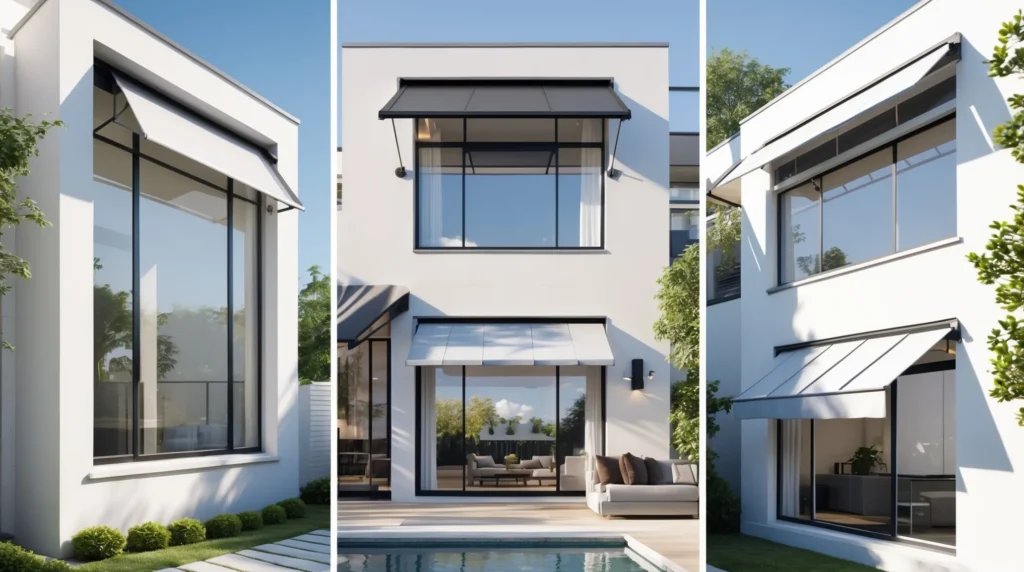
Awning windows come in many styles to match different spaces. Here are some popular options:
- Vertical awning windows – Tall, slim, and perfect for narrow wall sections.
- Horizontal awning window – Wider than tall, often used for modern homes.
- Awning bay window – Combines multiple panels, extending outward for extra space and light.
- Stacked awning windows – Placed on top of each other for design and airflow.
- Awning double-glazed windows – Made with two panes for better insulation.
By mixing these types, homeowners can achieve unique looks and functions.
Awning Window Parts and Design Details
Every awning window has several important parts:
- Frame – The structure holding everything in place.
- Sash – The moving part that swings outward.
- Hinges – Located at the top, allowing smooth opening.
- Crank or operator – The handle that opens the window.
- Screen – Keeps bugs out while letting air in.
The awning window design is both practical and stylish. Its parts work together to ensure smooth operation and weather resistance. Knowing these parts helps homeowners understand maintenance and replacement needs.
Benefits of Awning Windows Homeowners Appreciate
Many benefits of awning windows explain why people choose them:
- Airflow in rain – Stay open even when it’s drizzling.
- Energy efficiency – Tight seal reduces drafts.
- Privacy – Can be placed higher on walls while still letting in light.
- Versatility – Works in kitchens, bathrooms, basements, and living areas.
- Modern style – Sleek lines match contemporary designs.
These advantages make awning windows practical, stylish, and efficient.
Disadvantages of Awning Windows You Should Know
Of course, no window style is perfect. Here are some disadvantages of awning windows:
- Limited size – Not usually made in very large dimensions.
- Hard to clean from the outside – Especially on upper floors.
- Obstruction hazard – When open, they stick outward, which may block walkways.
- Not ideal for emergency exits – The opening space may not meet egress standards in bedrooms.
While these issues are worth noting, they don’t outweigh the benefits for many homeowners.
Awning Windows Pros and Cons: A Balanced View
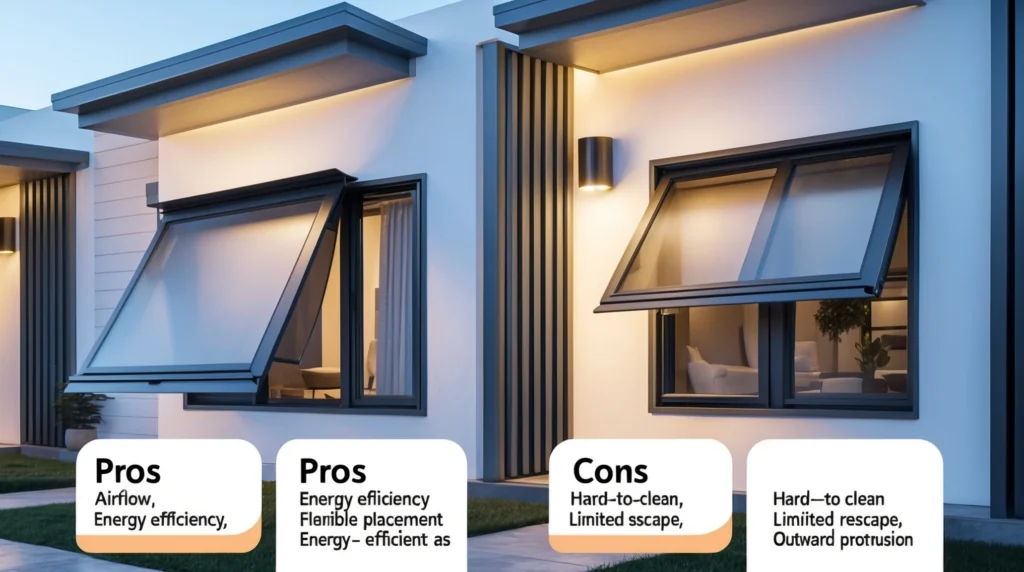
Looking at the pros and cons of awning windows gives a clear picture:
Pros
- Great airflow and rain protection.
- Tight, energy-efficient seal.
- Flexible placement.
Cons
- Cleaning difficulty.
- Limited use for escape routes.
- Protrudes outward when open.
This balanced view shows why awning windows are excellent in certain situations but not for every room.
Awning Window vs Casement and Hopper Windows: Key Comparisons
Homeowners often wonder how awning windows compare with other common styles:
- Awning window vs casement window – Casement opens from the side, awning from the bottom. Both use a crank, but casement allows bigger openings.
- Casement vs awning window – Casement provides more airflow but less rain protection.
- Awning vs casement windows – Awning fits better in tight spaces; casement offers broader views.
- Hopper window vs awning window – Hopper tilts inward from the top, opposite of an awning. It’s often used in basements.
- Awning window vs hopper window – Awning is better for airflow; hopper is better for basement egress.
- Awning and casement windows – These are often used together in modern designs for style variety.
These comparisons highlight the role of awning windows in the broader family of window styles.
Choosing Awning Windows in Coeur d’Alene with Inland Windows
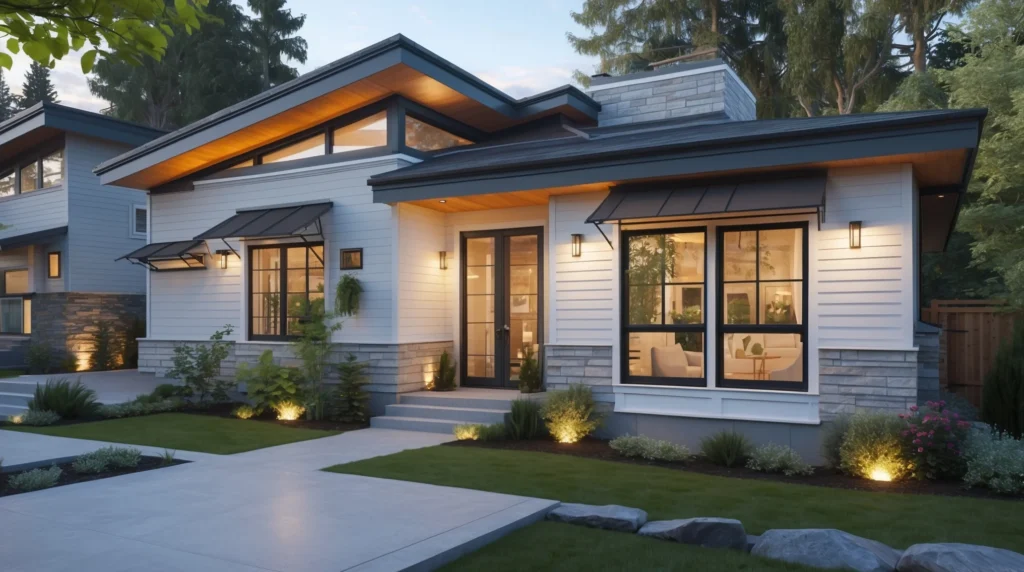
When it comes to selecting the right window for your home, trust matters. Inland Windows has years of experience helping homeowners choose the best styles, from awning style windows to casement and beyond. Our team understands local needs and designs solutions that fit both function and beauty. Whether you want to improve airflow, update your home’s look, or save energy, we provide guidance and trusted installation.
In Coeur d’Alene, having windows that balance beauty and performance is essential. With Inland Windows, you’ll get expertise, quality products, and professional support every step of the way.
Conclusion
Awning windows are simple yet smart. They open outward from the bottom, let in fresh air even during rain, and give homes a modern, versatile style. From their unique design and parts to the range of types like vertical, horizontal, bay, and double-glazed, they fit many spaces. Their benefits of awning windows include energy savings and privacy, while their disadvantages are mainly size and cleaning limits. Comparing awning window vs casement window or hopper window vs awning window shows their unique role in today’s homes. If you’re planning to add new windows, take time to weigh the pros and cons of awning windows and see how they fit your lifestyle. With the right choice, they can add value, comfort, and style for years to come.
Looking for expert guidance? Inland Windows is here to help you choose, design, and install the perfect windows for your home. Reach out today and let’s make your space brighter, more stylish, and more comfortable.