If you are asking what are casement windows, they are windows that open outward on side hinges, much like a door opens. Instead of sliding up or sideways, the entire window sash swings outward from one side. Most casement windows use a crank handle that turns smoothly to open and close the window. Some designs use a simple push out style, where you gently push the window open. When you close the window, the sash presses firmly against the frame. This tight seal helps reduce air leaks, which supports indoor comfort and can help improve energy efficiency.
Casement windows are known for being easy to operate. The crank handle makes opening smooth and controlled, even for people who do not have much strength. This makes them a practical option for areas that are harder to reach, such as above kitchen sinks or behind furniture. Because the window opens fully, it allows more fresh air to enter compared to many other window types. This helps improve air circulation and keeps rooms feeling fresh and comfortable.
Understanding the Casement Window Meaning and Why This Style Remains Popular
The casement window meaning is simple, it is a window that swings open on hinges. The casement meaning connects to the idea of a framed opening, where the glass sits inside a sash and frame.
This style stays popular for a few clear reasons. First, it opens wide, so air can move in and out fast. Second, it can seal tightly when you close it, which helps keep outdoor air from leaking inside. Third, it feels easy to use because the handle does most of the work.
Casement windows also look clean and modern, but they still fit older homes. That mix of style and function is why people keep choosing them.
What Are Window Casements and How They Differ From Other Window Types
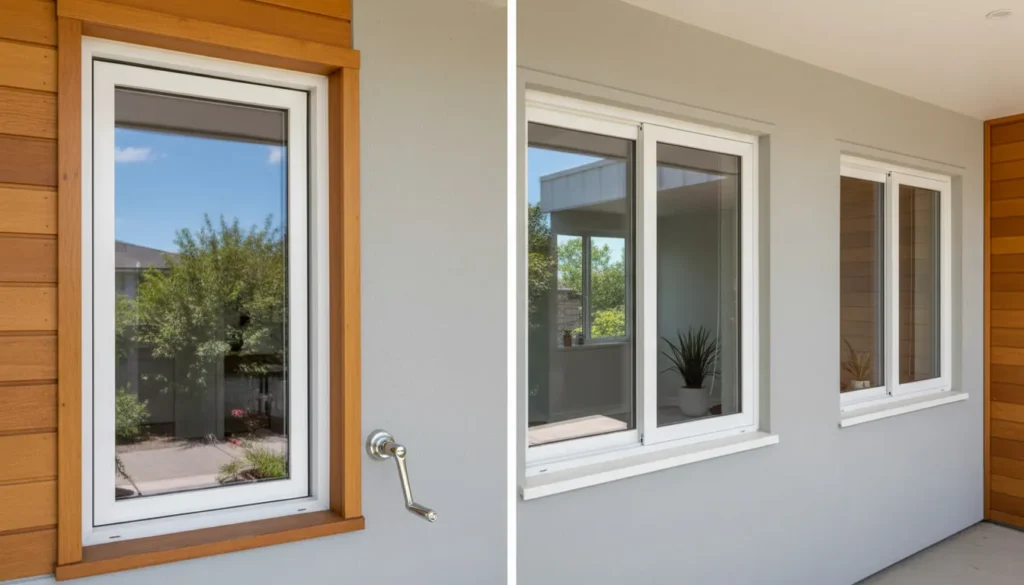
If you wonder what is window casement, think of the part of the window that opens and closes with hinges. A window casement is built to swing outward, instead of sliding up, down, or sideways.
Here is how they differ from other window types:
Sliding windows move left and right, but they only open halfway, so airflow is limited. Double hung windows move up and down, but you still do not get a full open space. Fixed windows do not open at all, they only give light and a view.
Casement windows open wider, which helps with ventilation. They also tend to close with a tighter seal, which can support better comfort in your home.
Casement Windows Definition Explained in Simple Terms for Homeowners
Here is a simple casement windows definition, explained in points so it is easy to follow:
- Definition of casement window: A window with side hinges that swings outward when you open it.
- How it opens: Most use a crank handle, some use a push out design.
- Main purpose: Fresh air, clear views, and easy daily use.
- How it closes: The sash presses into the frame for a tighter seal.
- Common feel: Smooth opening, strong locking, solid and secure.
- Where it fits: Kitchens, bedrooms, living rooms, and many other spaces.
This is the core idea behind casement windows, simple design, strong airflow, and a tight close.
What Are Casement Windows Used For in Everyday Residential Spaces
Casement windows work well in places where you want more airflow and easy control.
In a kitchen, they help push out cooking smells and bring in fresh air. Many homeowners like them over the sink because the crank handle makes them easy to open. In a bedroom, they support comfort by helping air move through the room. In a living room, they offer wide views and bring in natural light.
They also work well in bathrooms, because airflow helps reduce moisture. If your home often feels stuffy, casement windows can help the space feel fresher faster.
Key Parts of a Casement Window and How Each Component Works Together
Understanding the parts helps you know what you are buying and what to maintain. Each component supports smooth operation, comfort, and security.
- Frame: The frame is the strong outer structure that holds the entire window in place. It provides support and keeps the window stable inside the wall.
- Sash: The sash is the moving section that holds the glass panel. It swings outward when you open the casement window.
- Hinges: Hinges connect the sash to the frame. They allow the window to open outward smoothly and safely.
- Crank Handle or Operator: The crank handle helps you open and close the window easily. It gives you better control, especially in hard to reach areas.
- Locking System: Locks keep the window secure when closed. They help protect your home and keep the sash tightly sealed.
- Weather Seals: Weather seals help block air, dust, and water from entering. They improve comfort and help maintain indoor temperature.
- Overall Performance: When all parts work together properly, the window opens smoothly, closes tightly, and provides reliable comfort and security.
Types of Casement Windows and Popular Window Casement Styles You Should Know
There are several types of casement windows, and each one fits a different need.
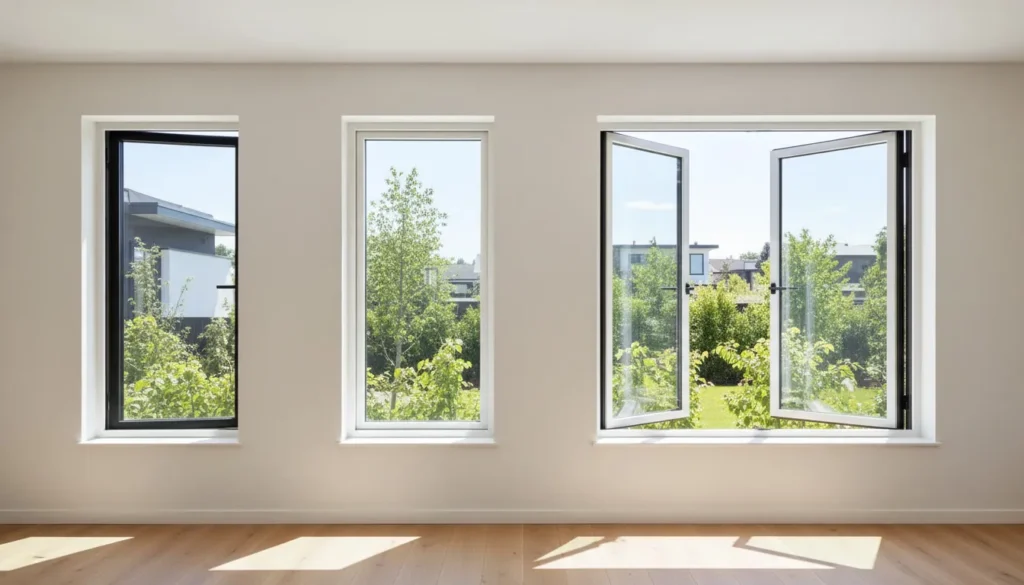
A single casement window has one sash that opens. A French style has two sashes that meet in the middle, often without a center post, which gives a wider clear opening. A push out style opens by pushing the sash outward, instead of using a crank.
You may also hear terms like types of casement window or window casement styles, these usually refer to how the window looks and opens, plus frame shape, hardware style, and finish.
Choosing the right type comes down to your space, your airflow goals, and the look you want.
What Are Double Casement Windows and When They Are the Right Choice
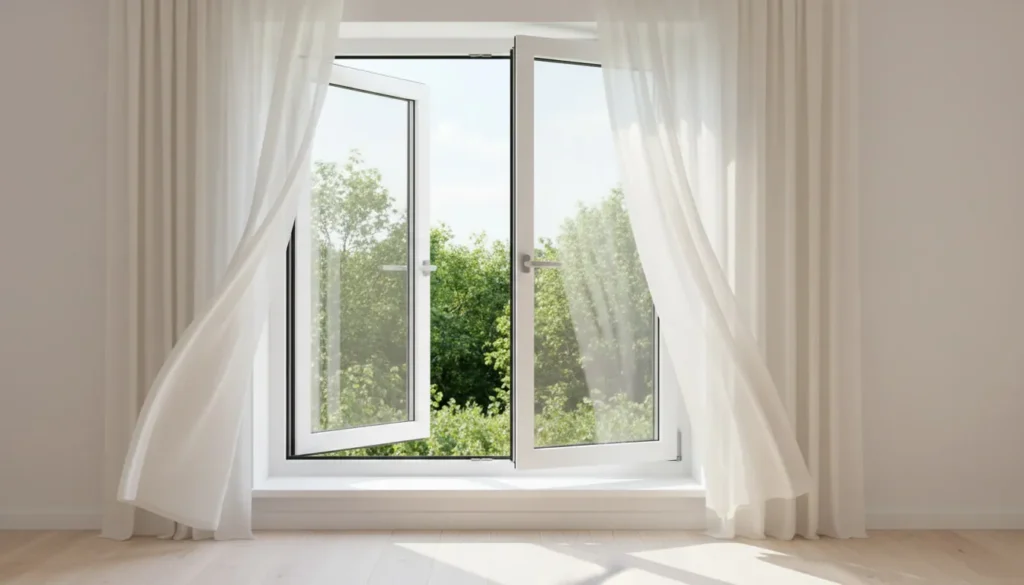
If you ask what is a double casement window, it usually means two casement sashes in one frame. They open from the center, one sash swings left, the other swings right.
This is a smart choice for wider window openings. It can bring in more air because both sides open. It also gives a broad view when open, which feels great in living rooms or larger bedrooms.
People often choose double casement windows when they want maximum ventilation and a balanced, clean look.
What Are Side Hung Casement Windows and Why They Provide Superior Ventilation
A side hung casement window is the classic casement style. The hinges sit on one side, and the sash swings outward from that side.
This design can improve ventilation because the open sash can catch breezes and guide air into the room. It also lets you control airflow, you can open it a little or a lot depending on the weather.
When closed, it can press tight into the frame, which supports comfort and helps reduce drafts.
How to Identify Casement Windows, Including Visual Features and Picture Examples
Casement windows are easy to spot once you know the signs.
They open outward, not up or sideways. You often see a crank handle on the inside. The hinge side is on the left or right edge. When you look at a picture of a casement window, you will notice the sash swings out like a door.
You may also see multi point locks along the frame, which helps with security and a tight close. These visual clues make it simple to identify a casement window in a home.
Choosing the Right Casement Windows for Your Home With Inland NW Windows in Coeur d’Alene, ID
Choosing the best casement window starts with your goals. Do you want more airflow, better comfort, easier operation, or a cleaner view. Next, you match the window type to the room and the opening size.
You also want to think about frame material, glass options, and lock quality. A good fit and a proper install matter just as much as the window itself.
Inland NW Windows can help you compare options, pick the right style, and choose features that make sense for your home and budget.
Conclusion
Casement windows open outward on hinges, giving you strong airflow and easy control. They can seal tightly when closed, which supports indoor comfort. They also offer clear views and work well in rooms that need fresh air, like kitchens and bedrooms.
If you choose the right type and install it well, a casement window can feel smooth, secure, and dependable for years.
Inland NW Windows can help you choose a window setup that fits your home, your style, and the way you live each day.
If you want help picking the best casement window style for your space, reach out for a simple consult and clear options, no pressure, just real guidance.