Summary
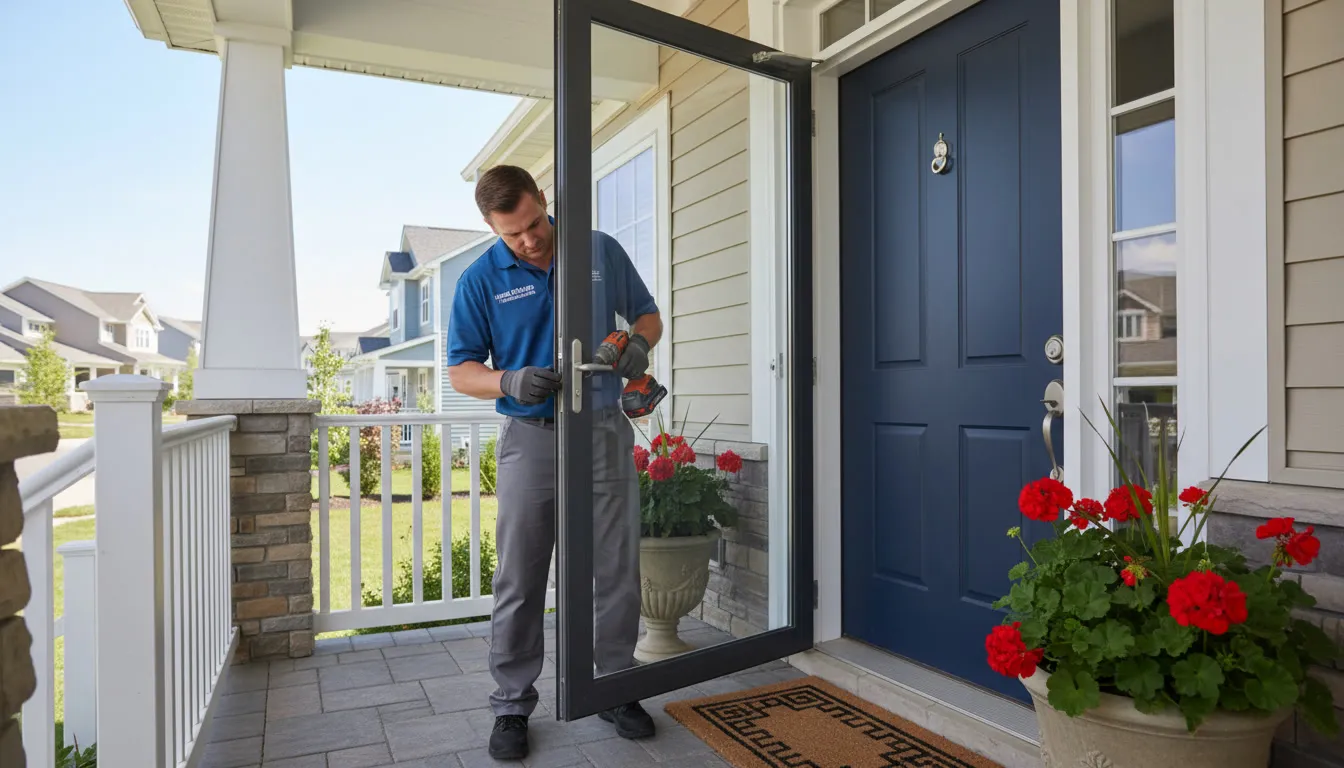
An egress window size is the minimum window opening required by building code so a person can safely exit a room during an emergency. In most homes, the opening must measure at least 5.7 square feet, with specific width and height rules. This standard helps protect families during fires and other dangers.
Egress windows are not just about light or fresh air. They are about life safety. If a fire blocks a hallway, a properly sized window gives you another way out. Firefighters can also enter through it to rescue someone inside.
Many homeowners think any window will work. That is not true. The window must meet strict safety rules. The opening must be large enough for an adult to climb through quickly. That is why codes clearly define emergency escape window size requirements.
When installed correctly, egress windows add safety, value, and peace of mind to your home.
Understanding Egress Window Size and Why It Is Regulated
Building codes exist to protect people. Window rules are part of these safety laws. When you ask, what is egress window size, you are really asking how large a window must be to count as a safe exit.
The law sets a minimum open area, not just glass size. This means the space you can climb through must meet code after the window is fully open. The well known rule is the egress window 5.7 square feet requirement for most below grade spaces.
Why 5.7 square feet? Safety experts studied how much space an adult needs to escape fast. They also considered how firefighters enter homes with gear. The result became the 5.7 sq ft egress window standard used in many states.
These rules are not random. They are based on research, testing, and real life emergencies.
What Is the Minimum Egress Window Size Required by Code?
Most residential building codes require:
- Minimum opening area of 5.7 square feet
- Minimum opening height of 24 inches
- Minimum opening width of 20 inches
- Maximum sill height of 44 inches from the floor
The 5.7 square feet rule applies mainly to basement and lower level rooms. On ground level floors, some codes allow a 5.0 square foot opening because stepping outside is easier.
Keep in mind, this is the clear opening space. It is not the frame size. Many homeowners measure the glass and think they are compliant. Inspections often fail because the open space is too small.
Emergency escape window size rules also include window well depth and ladder access for basement windows. These details matter just as much as the opening itself.
Minimum Basement Egress Window Size Explained for Homeowners
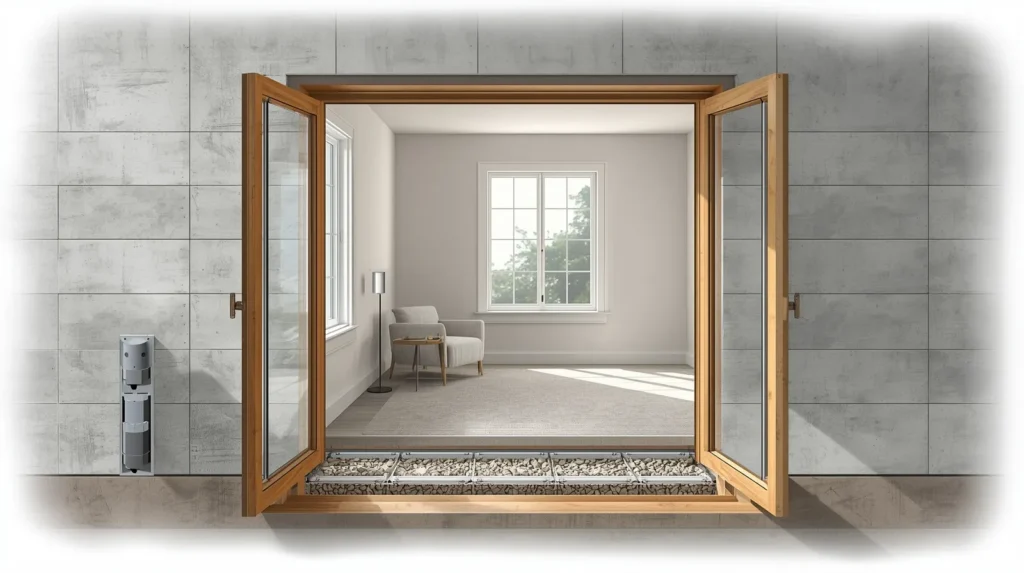
The minimum basement egress window size usually follows the 5.7 square foot rule. Basements are below ground, so escape is harder. That is why safety standards are strict.
If you finish a basement bedroom without meeting this rule, it may not count as a legal bedroom. This can affect home value and insurance.
Basement windows also require proper window wells. The well must allow the window to open fully. It also needs enough space for a person to climb out safely. If the well is deep, a permanent ladder may be required.
Homeowners often ask if smaller windows can be approved. In most cases, the answer is no. Safety codes rarely allow exceptions.
The 5.7 Square Feet Rule, What It Really Means for Your Window Opening
The 5.7 sq ft egress window rule means the total open area must equal at least 821 square inches. This number comes from multiplying width by height.
For example, a window opening that is 20 inches wide and 24 inches tall equals 480 square inches. That is not enough. To meet the 5.7 square feet standard, the opening must be larger.
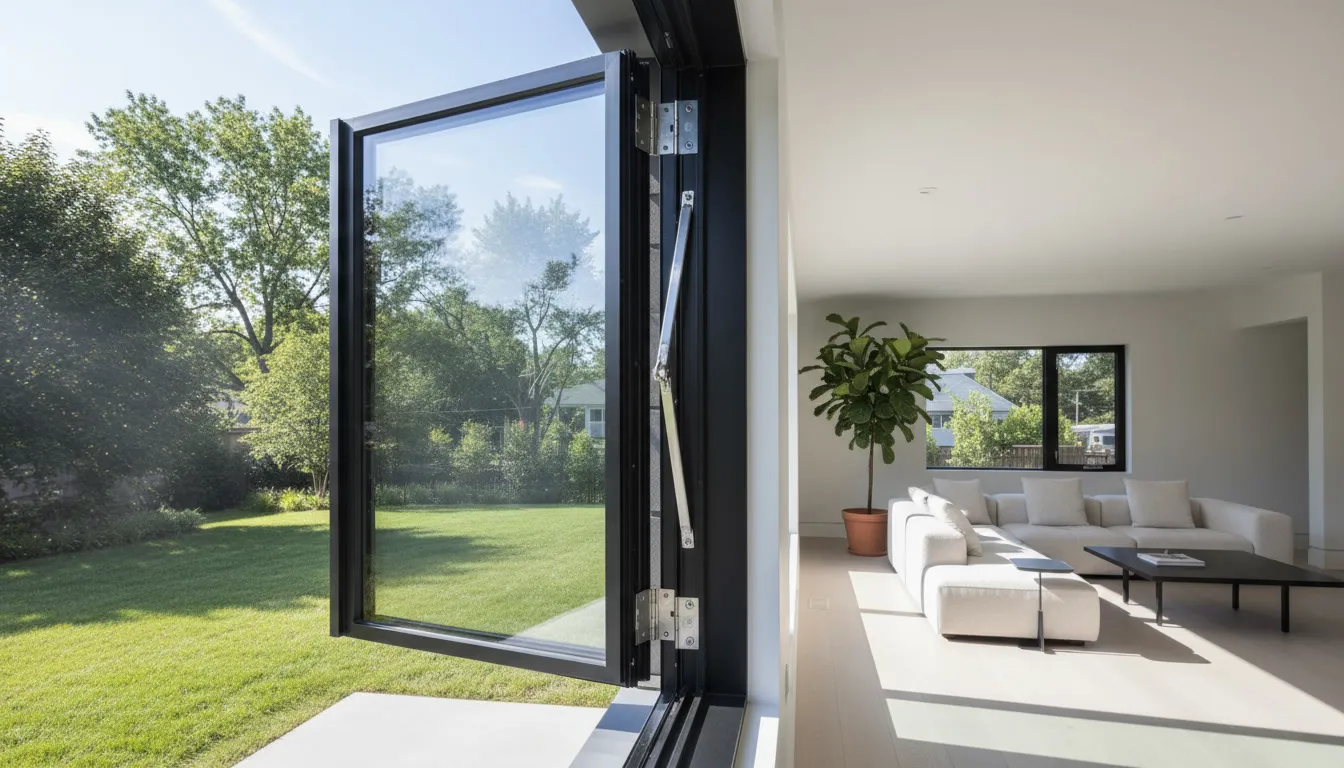
Many modern casement windows work well for meeting code. When fully open, they provide a wide and clear exit path.
This rule does not mean your window frame must be huge. It means the open space must allow a fast and safe escape.
How to Measure and Calculate Egress Window Size Correctly
To calculate opening size:
- Open the window fully.
- Measure the clear width.
- Measure the clear height.
- Multiply width by height.
- Divide by 144 to convert square inches into square feet.
If the result is 5.7 or more, you likely meet code. If not, adjustments may be needed.
Also measure sill height from the finished floor. It must not exceed 44 inches. This ensures children and adults can reach it without climbing on furniture.
Proper measurement prevents costly mistakes. Many homeowners guess. Guessing often leads to inspection delays and rework.
Common Egress Window Size Mistakes That Can Fail an Inspection
Here are common errors:
- Measuring the glass instead of the clear opening
- Ignoring sill height rules
- Installing sliders that do not open wide enough
- Using small basement hopper windows
- Forgetting window well clearance
Some people believe that any emergency escape window size close to the limit is fine. Inspectors look for exact compliance.
Another mistake is blocking the window with furniture. Even a code approved window becomes unsafe if access is blocked.
Planning carefully avoids these issues.
When Is an Egress Window Required in Bedrooms and Basements?
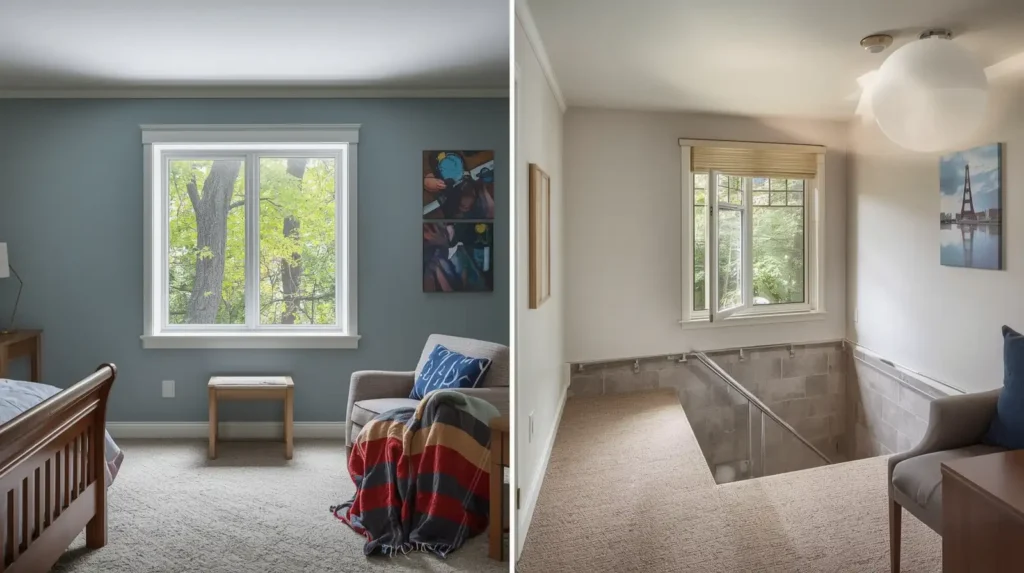
Building codes require at least one approved escape window in every sleeping room. This includes basement bedrooms.
If you convert a basement into living space, you must meet bedroom egress standards. Without it, the space may not qualify as a legal bedroom.
Some homeowners ask if older homes are exempt. Older homes may be grandfathered, but renovations often trigger updated requirements.
Adding a compliant window improves safety and resale value. Buyers often check for legal bedroom status before purchasing.
Local Code Considerations for Egress Window Size in Coeur d’Alene, Idaho
Most cities adopt national residential building codes with small changes. In Coeur d’Alene, Idaho, local building officials follow modern safety standards based on national guidelines.
It is always smart to confirm details with the city before starting work. Rules can change over time. Permit requirements may also apply.
Working with experienced professionals helps you avoid delays. They understand inspection steps and code compliance.
Upgrading Your Home, Why Proper Egress Window Size Increases Safety and Value
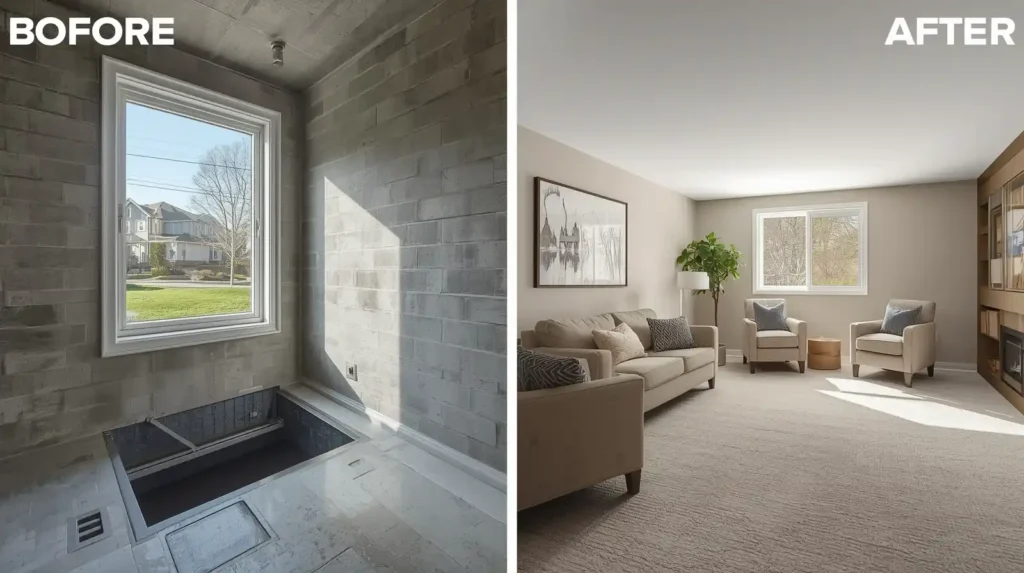
A compliant window adds more than safety. It increases natural light and fresh air. It can turn a dark basement into a bright living space.
Homes with legal basement bedrooms often sell for more. Buyers feel confident when safety standards are met.
Insurance companies also value compliance. Proper installation reduces risk and liability.
Professional installation ensures the opening meets code, the well drains correctly, and the frame seals tightly. Quality work prevents water leaks and structural issues.
Need Help Choosing the Right Egress Window Size? Talk to INLAND NW WINDOWS
Choosing the correct window can feel confusing. Codes, measurements, and inspections can overwhelm homeowners. That is where expert help matters.
At INLAND NW WINDOWS, we guide homeowners through each step. We measure carefully, explain requirements clearly, and install windows that meet safety standards. Our team focuses on long term durability and code compliance.
If you are planning a basement renovation or upgrading a bedroom window, we can help you choose the right solution the first time.
Conclusion
Egress window requirements protect families. The 5.7 square feet rule ensures enough space for safe escape. Basement bedrooms require strict compliance. Measuring correctly prevents inspection failure. Understanding what is egress window size helps homeowners make informed decisions.
Safety codes may feel complex, but their goal is simple. They save lives.
If you want clear answers and professional guidance, reach out to INLAND NW WINDOWS today. We are ready to help you choose the right window and complete your project with confidence.